


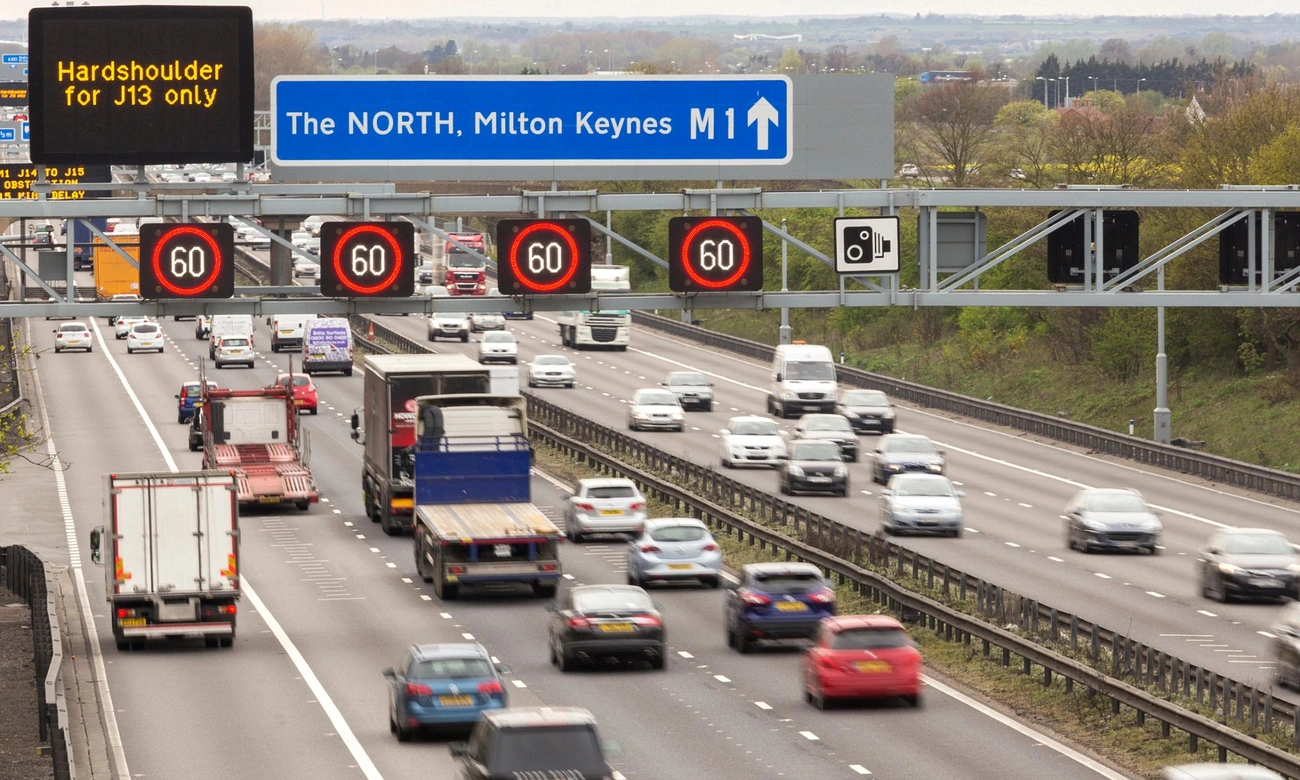
UK Motorways: Is Smart Really Safer?
The hard shoulder on the motorway has traditionally been seen as a critical safety feature for stranded drivers (which remains without dispute). However, the UK's transition to "smart motorways" has destroyed this "safe-zone" on hundreds of miles of motorways, provoking heated discussions about whether efficiency does (and should) trump safety.
Despite the government's pledges, latest numbers portray a disturbing picture for UK motorists who experience car breakdowns in areas that lack a dedicated emergency lane. Roadside assistance providers report much lengthier response times, while auto recovery agencies struggle to safely reach broken-down vehicles in traffic. Many drivers have expressed genuine dread at the thought of waiting for mobile tyre fitting or car transport services while being exposed to high-speed traffic. In reality, several high-profile incidents have raised fundamental doubts about the overall Smart Motorway concept.
This blog explores whether the promised benefits of smart motorways have materialised, what the evidence says about their safety record, and what alternatives may better serve both traffic flow and driver protection.
The rise of smart motorways in the UK
Britain's road infrastructure faced significant scrutiny at the turn of the 21st century, with road traffic estimated to cost the economy £2 billion annually (1). In fact, London consistently ranks as Europe's most congested city, with drivers losing over 100 hours annually in traffic. The financial burden of traffic was projected to increase even further, due to predicted traffic growth until 2035 (1). Initially, the Department for Transport faced a difficult choice: build entirely new motorways, expand existing ones at an enormous cost, or find an innovative solution.
Why were smart motorways introduced?
Smart motorways proved to be a cost-effective alternative to carriageway widening (1). The concept first appeared on the M42 in 2006 as an experimental project which used technology to monitor and respond to fluctuating traffic conditions (1). This approach offered several advantages over the traditional expansion projects. Primarily, it minimised environmental impact by avoiding the need to build additional lanes (2). Furthermore, it prevented the destruction of homes and preserved hundreds of acres of green space (equivalent to more than 700 Wembley Stadium-sized football pitches) (3).
The Department for Transport estimated that traffic would increase by between one-third and two-thirds over the next three decades (2) which allowed the smart motorway concept to emerge as an elegant solution to a growing problem. National Highways developed these systems to increase road capacity while simultaneously minimising construction time, cost, and environmental impact (2).
Initial expectations vs. real-world outcomes
Early results from the M42 trial appeared promising. A Highways Agency report showed journey times were reduced by up to 26% northbound and 9% southbound during afternoon rush hour (1). Additionally, the report indicated that there was a drop in accidents from over 5 per month to 1.5 per month (1).
The smart motorway program has since expanded to cover approx. 13% of England's motorway network (2). According to National Highways, these roads have demonstrated a 22% improvement in journey reliability (2). Studies on the M25 showed they enabled an additional 11,000 journeys per day (3), whereas on the M6 (Junctions 16-19), the average weekly commute was reduced by 40 minutes (3).
Nevertheless, public reaction has been mixed. Although statistics suggested safety improvements in some areas, public concerns about vehicle breakdowns in live traffic lanes have grown. This safety tradeoff has become the main focus of ongoing public debate about whether smart motorways truly deliver on their initial promise.
Are smart motorways really safer?
Safety claims regarding smart motorways remain highly contested among road users, motoring organisations, and government agencies. To further complicate the debate, examining the raw data reveals a complex picture that varies depending on which metrics are prioritised and how they are analysed.
Accident statistics and fatality rates
Official government data paints a multi-faceted picture of smart motorway safety. In terms of overall fatality rates, smart motorways appear relatively safe. Per mile travelled, fatal casualty rates are a third higher on conventional motorways (0.16 per hundred million vehicle miles) than on ALR motorways (0.12 per hundred million vehicle miles) (5). Similarly, National Highways reports that for 2016-2020, smart motorways of all types were the safest roads on the Strategic Road Network in terms of serious or fatal casualties (6).
Nonetheless, the number of deaths on these roads has raised concerns. Between 2015 and 2019, of the 7,515 deaths on England's roads, 431 were on motorways, with 24 occurring on ALR motorways (5). More recently, analysis revealed 24 fatalities on smart motorways during 2022 and 14 fatalities on motorways without a hard shoulder (7). This represents a concerning increase from the 15 fatalities recorded in 2021 (7).
The risk profile changes significantly when you examine the specific types of incidents. While overall casualty rates might be lower, the risk of a live lane collision between a moving vehicle and a stopped vehicle is greater on ALR and DHS motorways (8).
Comparison with traditional motorways
- For 25 out of 37 schemes, there has been a reduction in Personal Injury Collision rates after conversion to smart motorways (9).
- 32 out of 37 schemes have also seen a reduction in Fatal and Weighted Injuries rates (9).
- The risk of collisions between moving vehicles (which account for 96% of all collisions) is lower on smart motorways (10).
- Conversely, the rate of stopped vehicle collisions resulting in fatal or serious injury is greater for smart motorways without a permanent hard shoulder (6).
Perhaps the most concerning revelation is that breaking down on an ALR stretch is three times more dangerous than on traditional motorways, according to National Highways' own data (11). This creates a genuine dilemma for roadside assistance providers and vehicle breakdown services.
Data from 2024 indicates that smart motorways experienced 141,149 incidents compared to 110,299 on traditional motorways, despite smart motorways covering only 20% of England's motorway network (1). Yet National Highways maintains that this statistic doesn't reliably indicate safety, partly because smart motorways have technology to identify stopped vehicles, meaning more breakdowns are detected compared to other road types (1).
Public reaction and growing concerns
Drivers' trust in smart motorway systems
Trust in smart motorway safety has plummeted among UK drivers, with multiple surveys highlighting widespread concerns. An IAM RoadSmart survey found an overwhelming 85% of respondents want construction halted until safety is fully proven (12). Likewise, more than 80% reported feeling less safe on smart motorways compared to conventional ones (12).
The AA's survey of over 13,500 drivers revealed that one-third of motorists feel "unsafe" on these roads (13). This sentiment extends to specific stretches - a third of drivers surveyed specifically stated the M4 in Berkshire "doesn't feel safe" (13). Most concerning, 84% of drivers have little faith in current safety systems to protect them if they experience a breakdown in a running lane (12).
Essentially, driver confidence has been shattered by high-profile incidents of injuries and fatalities. As motoring journalist Maria McCarthy noted, "I think a lot of people have felt very sceptical and anti-smart motorways since they were introduced" (13).
Media coverage and public campaigns
Media investigations have intensified public concerns. BBC Panorama revealed that the technology used to manage England's smart motorways has failed hundreds of times (14). The program also reported that at least 79 people have died on smart motorways since their introduction in 2010 (14).
Public campaigns have gained significant momentum. Claire Mercer founded "Smart Motorways Kill" after her husband Jason's death in 2019, leading a relentless campaign that contributed to the government banning new smart motorways in 2023 (15). Coroners investigating fatalities have been particularly damning, with one concluding that smart motorways "present an ongoing risk of future deaths" (16).
The role of motoring organisations like the AA and RAC
Leading motoring organisations have consistently opposed current smart motorway designs. The RAC recently called for the hard shoulder to be reinstated on all smart motorways (17). Their research showed that 69% of drivers want the hard shoulder returned, regardless of government claims that it would be "too disruptive and costly" (18).
The AA has been equally vocal, with president Edmund King describing lobbying "13 transport secretaries and ministers of state on the subject, only to be told he was being too 'emotional'" (17). King has repeatedly highlighted that 37% of breakdowns on smart motorways happen in live lanes, leaving drivers as "sitting ducks" (19).
These organisations have consistently advocated for alternatives. The RAC suggested converting ALR stretches to DHS, which have better safety records and the backing of 70% of drivers (18). This approach would retain the technological benefits while restoring the critical safety feature of a hard shoulder during emergencies.
Government response and policy changes
Cancellation of future smart motorway projects
After years of debate over smart motorway safety, the UK government announced a significant policy reversal in April 2023. Prime Minister Rishi Sunak fulfilled his campaign pledge by canceling all plans for new smart motorways, citing financial pressures and a "lack of public confidence felt by drivers" (3).
The cancellation impacted 11 schemes already paused from the second Road Investment Strategy (2020-25) and 3 projects earmarked for the third Road Investment Strategy (2025-30) (20). Only two ongoing projects, the M56 J6-8 and M6 J21a-26, would continue as they were already over three-quarters constructed (3). Transport Secretary Mark Harper emphasised that "this government is listening to their concerns," acknowledging public’s growing distrust of roads without a hard shoulder on motorway sections (3).
Plans to retro-fit emergency refuge areas
Even though new projects were halted, the government committed £900 million toward improving existing smart motorways (3). This investment includes installing 150 extra emergency areas across the network by 2025 (21), providing critical space for vehicle breakdown situations and roadside assistance access. Each refuge area will extend 100 meters in length, spaced between 0.75 and 1 mile apart (22) which is crucial improvements for car recovery services.
Criticism of slow implementation and oversight
Unsuprisingly, progress on these safety improvements has faced substantial criticism because as of April 2023, only 13 emergency refuges had been completed out of the promised 150 (23). By December 2024, this number had risen to 56 (24), with the remaining 95 areas scheduled for an ambitious March 2025 completion (including 70 planned for that month alone - yikes!) (24).
A 2021 House of Commons transport committee report was particularly damning, stating ministers had "failed to do due diligence on the safety risks" prior to implementing the "no emergency lane" policy (17). In response to these criticisms, National Highways operations director Andrew Page-Dove acknowledged that action was being taken to "close the gap between how drivers feel and what the safety statistics show" (23).
What are the safer alternatives?
Dynamic hard shoulder running
Dynamic Hard Shoulder (DHS) motorways represent an earlier approach first tested on the M42 in 2006. These sections temporarily convert the hard shoulder from an emergency refuge zone into a traffic lane during peak periods (25). The results were impressive. Accident rates dropped from over 5 per month to approximately 1.5 per month (25). Unlike ALR schemes, DHS motorways operate at a maximum speed of 60 mph when the hard shoulder is in use (6), providing additional safety margins for roadside assistance services.
Controlled motorways with permanent hard shoulders
Controlled motorways offer perhaps the most compelling safety alternative. These retain the traditional hard shoulder while adding smart technology like variable speed limits and overhead signage (26). Crucially, government data confirms these are "the safest type of motorway, with the lowest casualty rates" (27). This lane layout eliminates the dangerous confusion reported with dynamic systems while preserving essential refuge space for vehicle breakdowns and car recovery operations.
Integrating technology without removing safety lanes
The original M42 pilot demonstrated how technology could enhance safety alongside traditional hard shoulders. This installation featured emergency refuge areas spaced every 500 meters (27), considerably closer than later designs. The enhanced detection systems can identify stopped vehicles while maintaining dedicated emergency lanes (28). This balanced approach addresses both congestion and safety concerns without forcing drivers to remain in live traffic during breakdowns.
Conclusion
The evidence that is available to us today demonstrates that smart motorways present a complicated safety picture. While these roads show lower overall casualty rates per mile traveled than traditional motorways, breaking down on an all-lane-running stretch remains three times more dangerous. Safety organisations, recovery services, and the public have consistently expressed serious concerns about vehicle breakdowns without access to a dedicated hard shoulder. Consequently, trust in these new road systems has plummeted, with surveys revealing that over 80% of drivers feel less safe on smart motorways compared to traditional ones.
The UK Government has finally acknowledged these concerns. The cancellation of planned smart motorway projects marks a major change in policy after years of opposition. However, it is still unclear if adding emergency refuge areas will adequately solve safety concerns on existing stretches. Progress has been worryingly slow, with less than half of the promised 150 emergency areas finished as of December 2024.
Considering other options, both Dynamic Hard Shoulder running and Controlled motorways with permanent hard shoulders provide strong safety benefits. Controlled motorways stand out as the safest choice based on government data. They keep traditional emergency lanes while using smart technology.
Smart motorways ultimately represent a cautionary tale about prioritising cost savings and traffic flow over driver safety. The initial promise of these roads has been overshadowed by tragic incidents and persistent fears among road users. Though technology continues to play a vital role in modernising Britain's road network, future infrastructure must balance innovation with fundamental safety principles, specifically, providing drivers a secure place to stop during emergencies. After years of debate and numerous preventable deaths, the message from drivers remains crystal clear: efficiency should never come at the expense of safety.
For safer breakdowns - download the HardShoulder App, before you need it.